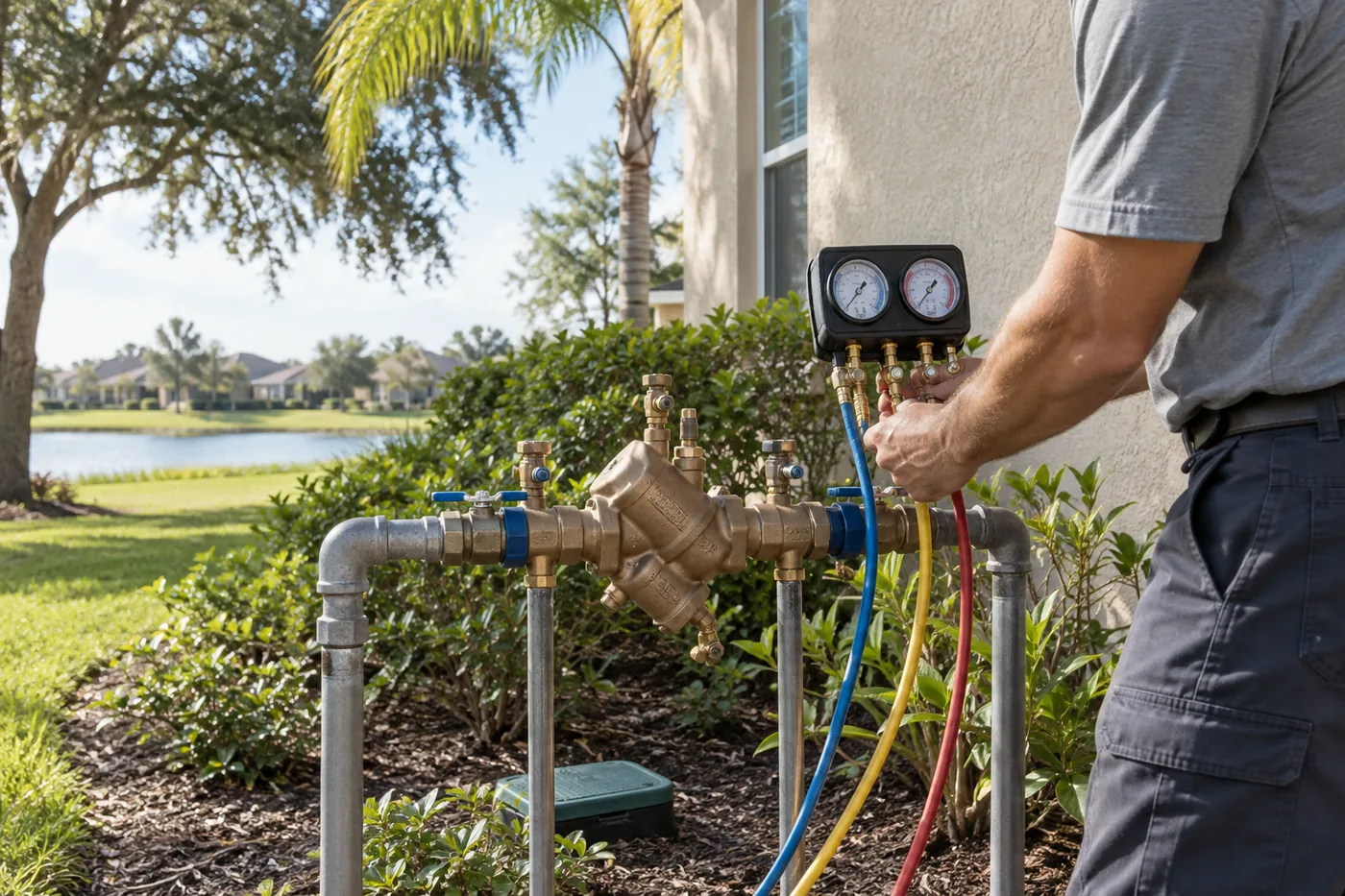
If you received a backflow testing notice, start with the service address, serving utility, assembly information, and due date. Apopka, Orange County Utilities, Ocoee, Winter Garden, and neighboring utilities operate separate cross-connection programs. The utility shown on the water bill—not the mailing-city name alone—determines the schedule and reporting process.
For properties served by the City of Apopka, applicable residential assemblies are tested every two years and commercial assemblies annually. Testing is mandatory for covered assemblies. A qualified tester identifies the device, uses calibrated equipment to check its components, records the result, and follows the City’s current submission process.
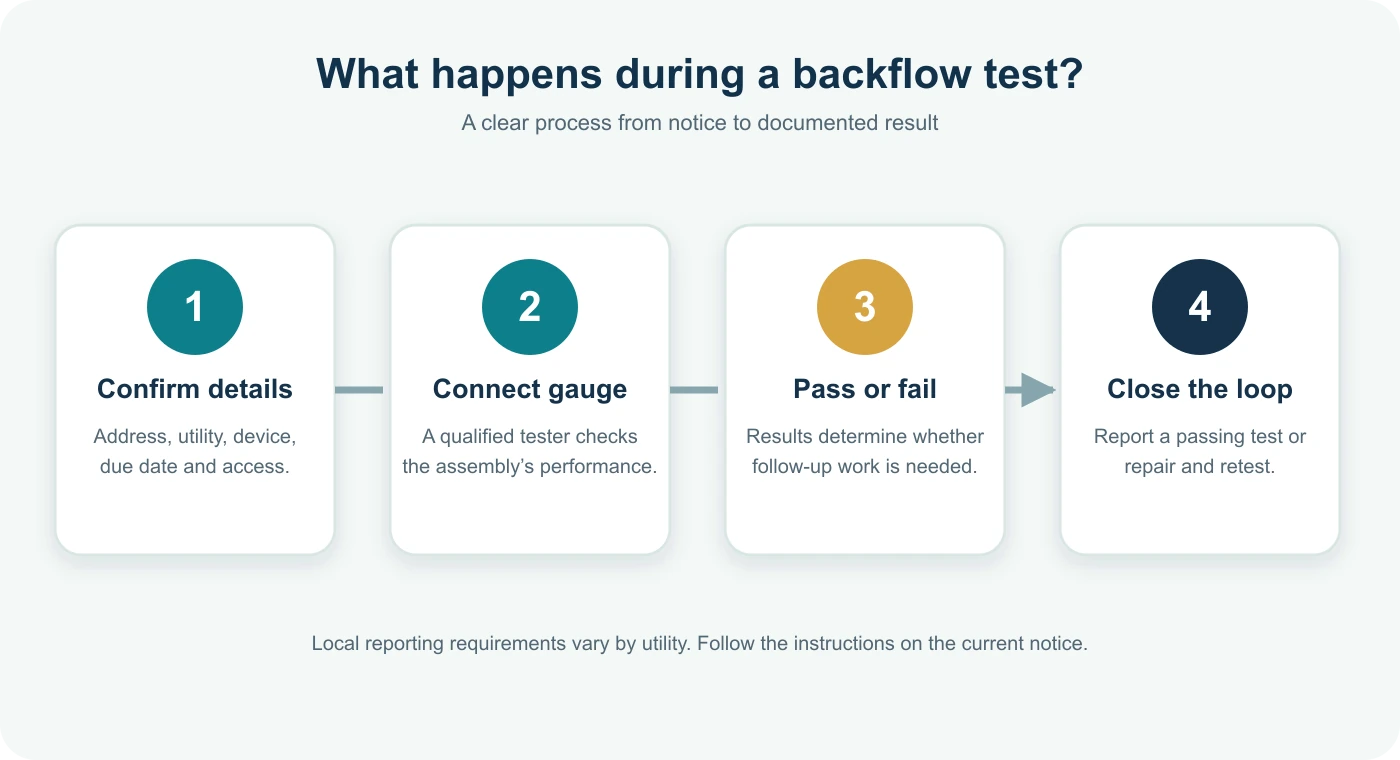
What happens during a backflow test?
- Confirm the property and utility. The notice, water bill, and service address establish which rules apply.
- Locate and identify the assembly. The tester records its type, manufacturer, model, size, serial number, and location when available.
- Inspect the test setup. Shutoff valves, test cocks, visible condition, and safe access are checked before the field procedure begins.
- Measure component performance. The sequence depends on whether the device is an RP, PVB, DCVA, or another approved testable assembly.
- Document pass or fail. A passing result follows the utility’s reporting workflow. A failed result requires corrective work and another test.
What a backflow test verifies
A field test is not a general plumbing inspection. It checks whether the assembly’s internal checks, air-inlet or relief-valve components, and shutoff arrangement perform within the standard for that device type. The tester’s measurements—not the age or outside appearance of the assembly—determine whether it passes.
Testing may briefly interrupt water flow through the assembly. Tell the service provider about tenants, irrigation schedules, business operations, medical equipment, or other conditions that make a shutdown sensitive. Fire-protection assemblies require separate planning and should be routed through the fire-line testing process.
What to have ready
- Service address and serving water utility
- Complete city or utility notice, if one was received
- Compliance due date and account or assembly number
- Residential or commercial property type
- Assembly location, type, size, and serial number if known
- Gate, tenant, irrigation-control, or mechanical-room access details
- Information about a previous failure, repair, or replacement
Apopka testing and reporting
The City of Apopka places responsibility on the water customer to keep applicable assemblies tested and maintained. Properly certified testers enroll in the City’s Backflow BMP program and submit results through its reporting portal. The City’s published tester list is a courtesy list, not an endorsement, and it says any technician who can supply acceptable current certification may qualify.
If the assembly fails, Apopka’s ordinance requires it to be repaired and retested or replaced within 14 days. Commercial failures require immediate remediation. Review the complete Apopka requirements and the property’s current notice before relying on a deadline.
Testing, repair, and replacement are different steps
Testing produces a measured pass or fail result. Repair addresses a serviceable problem, while replacement installs another approved assembly when repair is impractical or the device is unsuitable. Any repaired or newly installed assembly still needs testing so its performance can be documented. See the failed-test guide for the full correction path.
Backflow testing questions
Who can perform a test in Apopka?
Apopka requires a licensed plumbing contractor or an appropriately trained and certified technician meeting the City’s current requirements. Testers who report through Backflow BMP must complete the City’s enrollment process.
Does every property use the same schedule?
No. Apopka publishes a two-year cycle for applicable residential assemblies and an annual cycle for commercial assemblies. Other utilities use their own programs, and reclaimed-water dual checks are maintained differently from standard testable assemblies.
Does testing require a plumbing permit?
The City’s Cross-Connection Control Manual says a plumbing permit is not required for testing or repair. Installation, new construction, and fire-protection work can involve separate permit or licensing requirements.
Does a repaired assembly need another test?
Yes. Testing after repair confirms whether the assembly now meets the required performance standard and provides the result needed for reporting.
Is this website operated by the City of Apopka?
No. Apopka Backflow is an independent informational and service-request website and is not affiliated with or endorsed by the City.
Official references: City testing requirements, Cross-Connection Program, and the City manual.