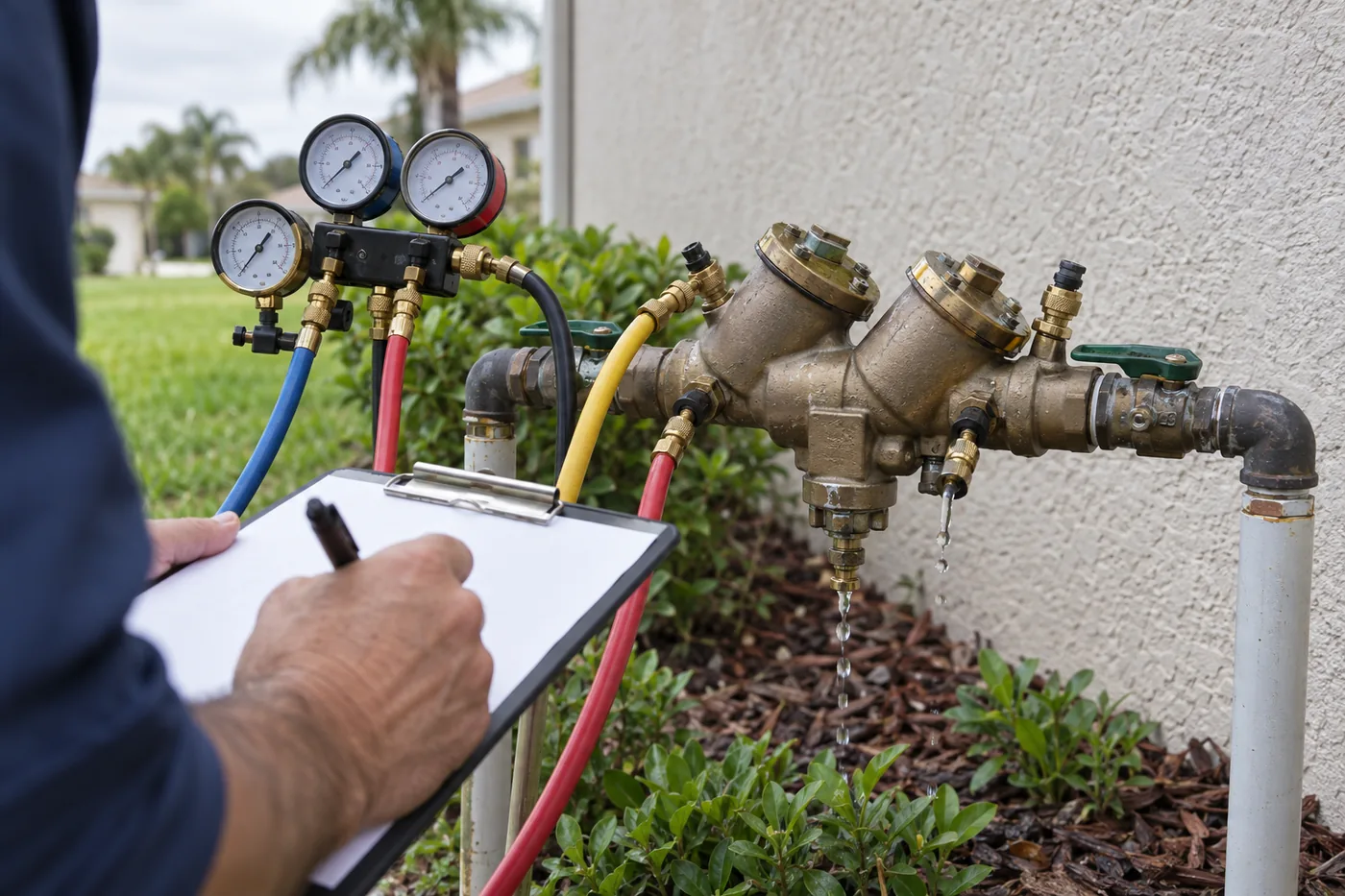
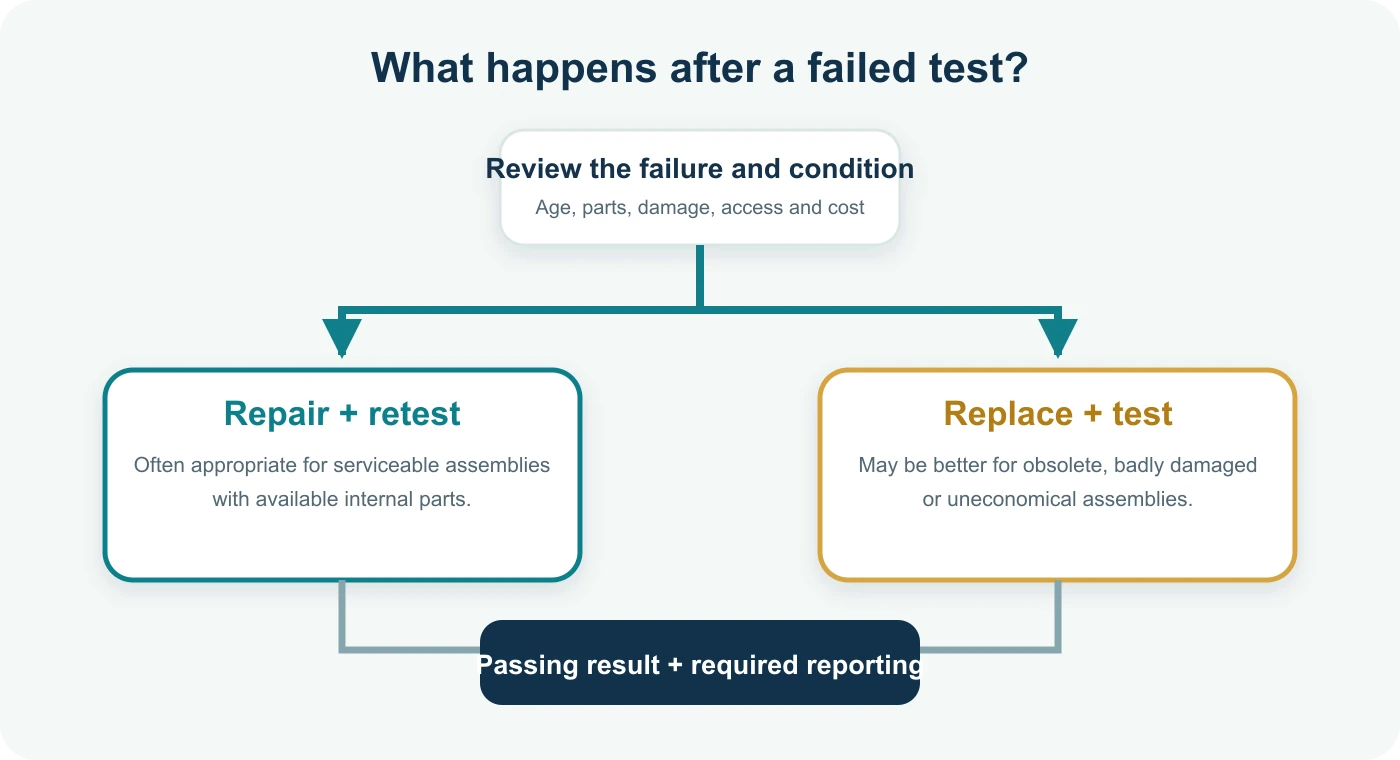
A failed backflow test does not mean the compliance process is complete. It identifies the component or condition that needs attention. The usual path is repair followed by retesting, or replacement followed by testing, with the acceptable result submitted through the serving utility’s reporting system.
For a property served by the City of Apopka, the ordinance requires a failed assembly to be repaired and retested or replaced within 14 days. The City’s current commercial guidance says failed commercial tests require immediate remediation. Use the earliest applicable deadline and the instructions printed on the property’s notice.
What to do after a failed backflow test
- Keep the failed report. It should identify the assembly and the component or performance standard that failed.
- Confirm the utility and deadline. Rules differ among Apopka, Orange County Utilities, Ocoee, Winter Garden, and other providers.
- Protect the assembly. Do not operate valves or dismantle the device unless qualified for that work.
- Evaluate repair versus replacement. Condition, approved type, parts availability, installation, and total cost all matter.
- Complete corrective work. Use a provider qualified for the device and scope, especially for fire protection.
- Retest the assembly. A repair invoice alone does not demonstrate restored performance.
- Submit and retain the result. Confirm that the corrected report reaches the utility and keep a copy.
Repair or replacement?
Repair can be practical when the body and shutoff valves are serviceable and approved parts are available. Debris, worn checks, seals, springs, or relief-valve components may be correctable. The tester or repair provider should explain the measured failure and the proposed work.
Replacement may be more appropriate when the body is cracked, badly corroded, obsolete, incorrectly configured, repeatedly failing, or uneconomical to rebuild. The new assembly must be approved for the application, installed under the applicable requirements, and tested after installation.
Why backflow assemblies fail
- Debris or mineral buildup preventing a check from sealing
- Worn seals, springs, checks, or relief-valve components
- Leaking, seized, or damaged shutoff valves
- Corrosion, freeze damage, impact, or cracked bodies
- Improper installation, orientation, drainage, or clearance
- An assembly type that is no longer acceptable for the identified hazard
- Long periods without operation or maintenance
Visible age alone does not determine pass or fail. Calibrated test measurements show whether a testable assembly meets its performance standard.
Retesting and reporting after corrective work
Apopka requires inspection or testing after repair. The follow-up test documents whether the corrected assembly now performs acceptably. Properly enrolled testers submit results through the City’s Backflow BMP portal. The water customer should confirm submission and retain the failed report, repair or replacement record, and passing retest together.
The City manual says testing and repair do not require a plumbing permit. Installation, new construction, and fire-protection work can have different permit and licensing requirements. If the failure involves a fire-line assembly, use the fire-line service process.
If the deadline is close
Request help promptly and include the full notice, due date, failed report, assembly details, and access information. Do not assume that scheduling an appointment pauses enforcement. Only the serving utility can approve an extension or interpret its notice, so contact the City’s Cross-Connection team when deadline relief is needed.
Failed-test questions
Can I submit the original failed result after a repair?
No. The correction needs a passing retest. The updated test—not only proof that parts were changed—documents restored performance.
Does every failure require replacement?
No. Many failures are repairable, but cracked, obsolete, badly corroded, improperly installed, or repeatedly failing assemblies may be stronger replacement candidates.
Who is responsible for the device?
For City of Apopka accounts, the water customer is responsible for applicable installation, testing, maintenance, corrective work, records, and ensuring the report is submitted.
How long does Apopka allow after a failure?
The ordinance states 14 days to repair and retest or replace a failed device. Commercial failures require immediate remediation, and a notice may set an earlier or property-specific deadline.
Is Apopka Backflow affiliated with the City?
No. It is an independent informational and service-request website and is not affiliated with or endorsed by the City.
See the testing process, Apopka requirements, official City guidance, and Section 78-211.