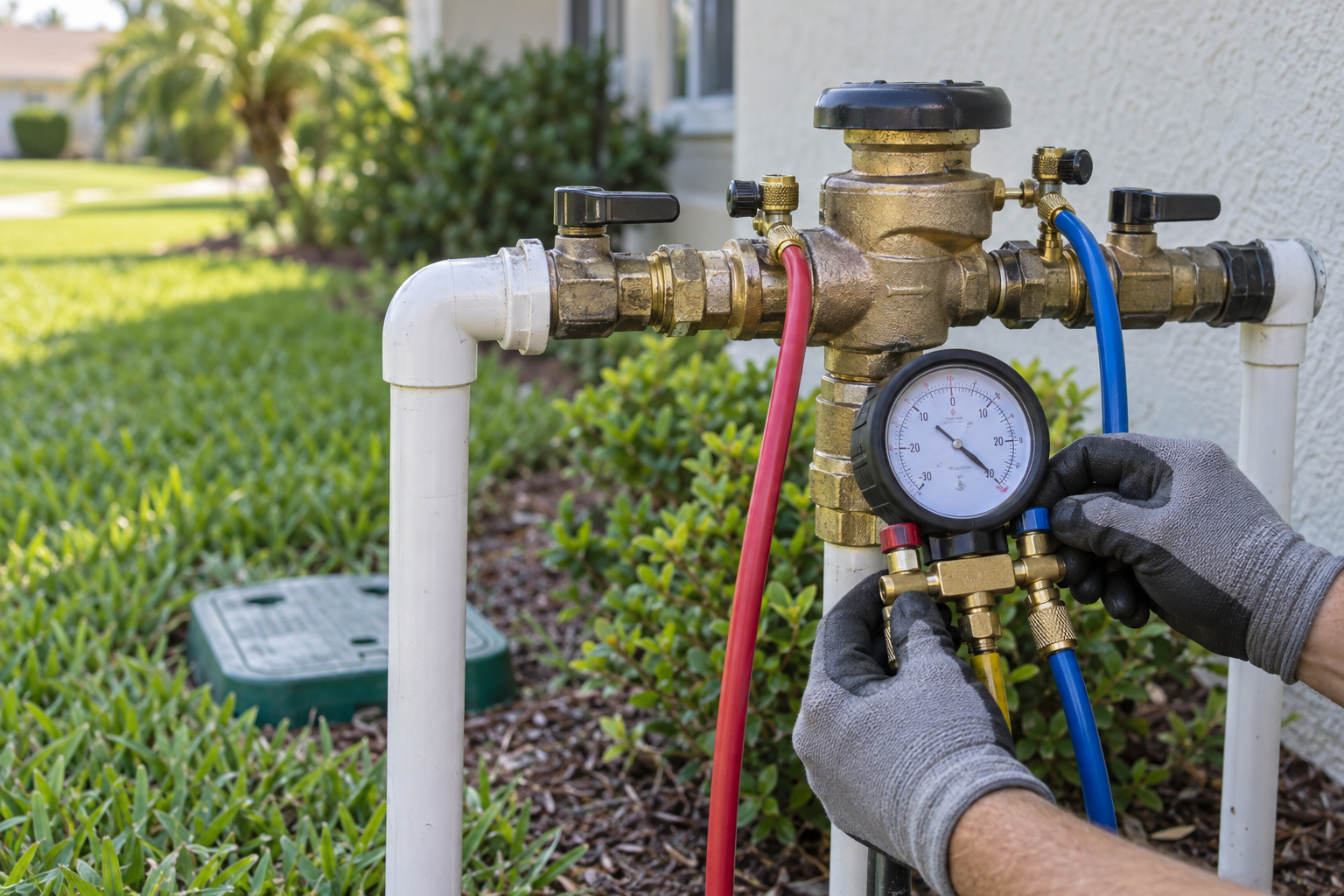
A residential backflow notice usually identifies a service address, assembly or account record, and completion date. Keep the entire notice. Before scheduling, confirm that the City of Apopka supplies the property and determine whether the notice concerns a testable assembly or a non-testable reclaimed-water dual check.
For applicable residential service connections supplied by the City of Apopka, testing is required every two years. The water customer is responsible for arranging the test, correcting a failure, keeping records, and ensuring the result reaches the City through its current reporting process.
Why an Apopka home may need backflow protection
A cross-connection is an actual or potential connection between potable water and another water source or system. Residential risks can involve potable-water irrigation, private wells, ponds or surface water, reclaimed water, swimming pools, hose connections, and some fire-sprinkler arrangements. The required protection depends on the water source, degree of hazard, property configuration, and current utility requirements.
Apopka’s published assembly table distinguishes among reduced-pressure assemblies, pressure vacuum breakers, double-check valve assemblies, and dual checks. Do not choose or replace a device from a photograph alone. The City’s evaluation and the property’s use determine the acceptable assembly type.
What to do after receiving a residential notice
- Verify the utility. An Apopka mailing address may be served by the City, Orange County Utilities, or another provider.
- Read the due date. Request service early enough to leave time for repair and retesting if needed.
- Locate the assembly. Photograph its tag, manufacturer, model, size, and serial number when safely accessible.
- Do not operate the valves. Leave testing, adjustment, and disassembly to a properly qualified provider.
- Arrange the correct service. Use a tester who meets the serving utility’s current certification and reporting requirements.
- Keep the completed record. Confirm who submits the passing result and retain a copy.
Where a residential backflow preventer may be located
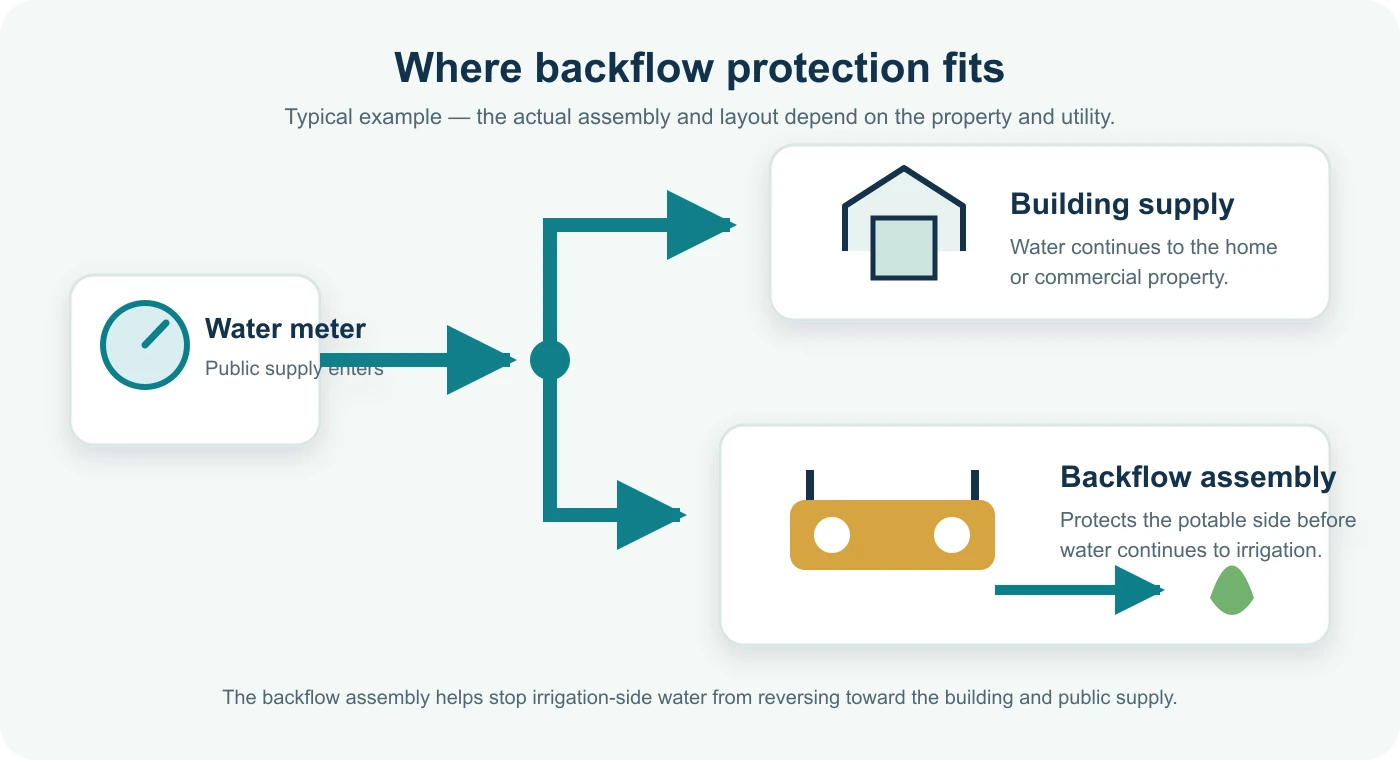
The location varies with the water source and plumbing layout. The City notes that a device at a reclaimed-water property may be on the customer side of the potable meter, while a potable-water irrigation assembly may be near the irrigation valves. Some assemblies are above ground; others can be in an approved enclosure. If the device cannot be located, contact the City’s Cross-Connection team rather than guessing.
Potable-water assemblies and reclaimed-water dual checks
These devices do not follow the same process. Apopka states that a dual check serving a reclaimed-water property is maintained on a five-year cycle because it is not testable like an RP, PVB, or other standard testable assembly. Customers in reclaimed-water areas may also encounter the City’s conversion process. Confirm the device and water source before requesting a standard field test. The irrigation backflow guide explains this distinction further.
Passing, failing, and reporting
A passing test documents acceptable performance at the time of testing. The certified tester follows the applicable City reporting process through Backflow BMP. If the assembly fails, Apopka’s ordinance requires repair and retesting or replacement within 14 days. The current notice may require faster action, so use its instructions.
Testing or repair does not require a plumbing permit under the City manual. Installation and some fire-protection work can have different permit or licensing requirements. Review what happens after a failed test before authorizing corrective work.
Residential testing questions
How often does Apopka require residential testing?
The City’s published interval is every two years for applicable testable residential backflow assemblies.
Who can perform the test?
Use a properly certified tester whose current credentials meet Apopka’s requirements. The City’s published list is provided as a courtesy and is not an endorsement.
What if the home uses another water utility?
Follow the serving utility’s program, not the mailing-city name. Provide the address and notice so the correct schedule and submission process can be confirmed.
Does a repaired residential assembly need retesting?
Yes. Apopka requires testing after repair, and a failed assembly must produce an acceptable follow-up result.
Is Apopka Backflow part of the City?
No. This is an independent informational and service-request website, not a City department or endorsed tester.
Review the complete Apopka requirements, the general testing process, and the City’s official testing page.