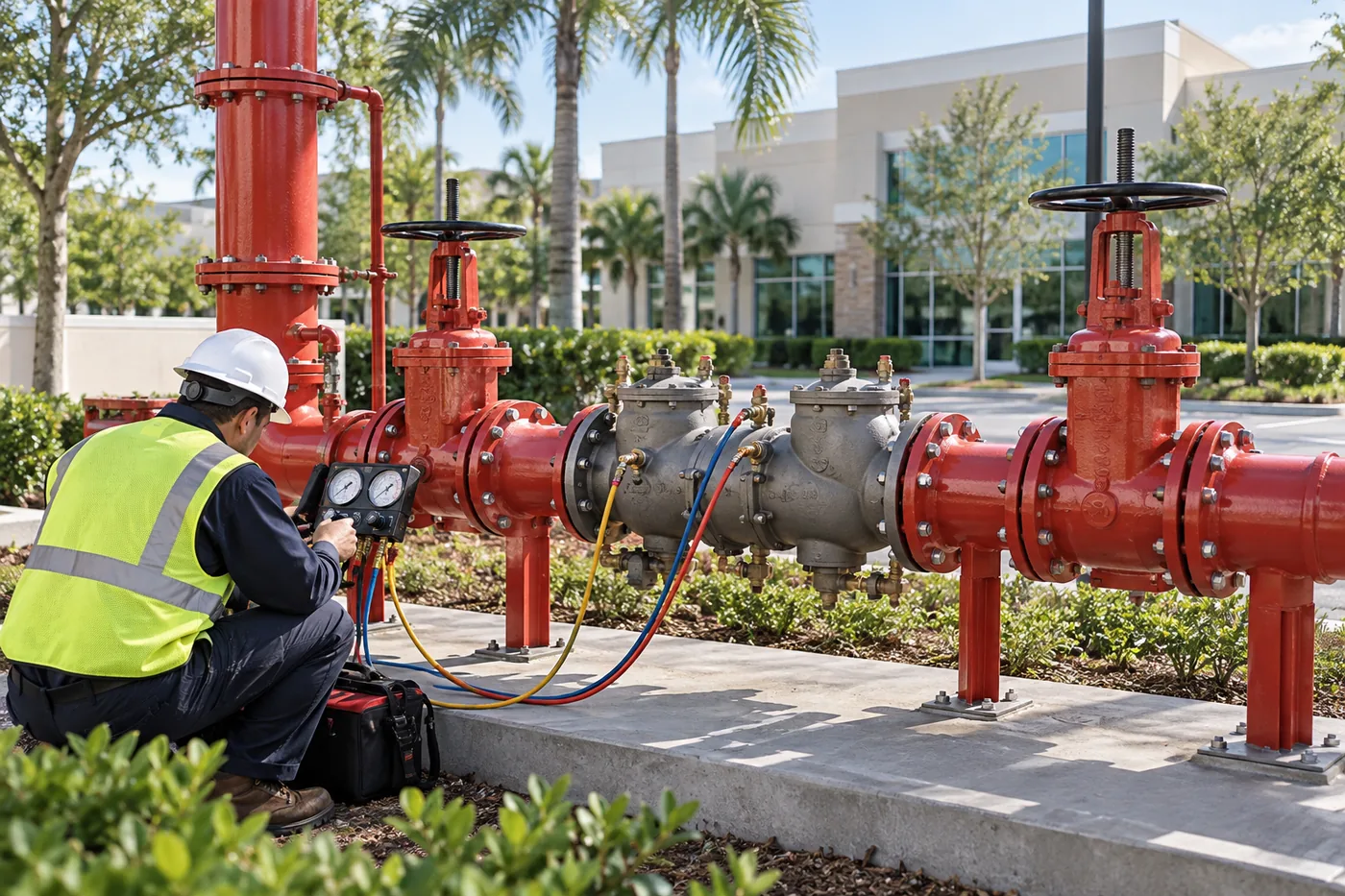
A backflow assembly on a dedicated fire service is not the same as a lawn-irrigation device. Testing can affect a life-safety system and may involve monitored valves, alarms, supervisory devices, impairment procedures, and fire-protection credentials. The request must be matched to a provider qualified for the particular system and scope.
For covered City of Apopka commercial accounts, backflow assemblies are tested annually. The property’s notice, account classification, assembly record, and fire-system configuration should be reviewed before scheduling. This site does not assume that a future operator holds every fire credential.
What makes fire-line backflow testing different?
- The water service supports a fire-suppression or standpipe system
- The assembly may be a DCVA, RPBA, detector assembly, or another approved configuration
- Control valves and tamper switches can be monitored or supervised
- Testing may require a planned impairment and restoration procedure
- Property management, alarm monitoring, and fire-system contacts may need notice
- Repair or replacement can require fire-protection licensing beyond standard tester certification
- The passing result must still follow the water utility’s reporting process
Apopka fire-service assembly guidance
The City manual distinguishes fire-protection systems with chemical additives from systems without additives. Its minimum-protection table identifies an RP or RPBA where chemical additives create the higher hazard and a DCVA for qualifying systems without additives. The final requirement depends on the system, service size, hazard, and City determination.
The manual also describes an exception for certain integrated residential fire-protection systems that share domestic plumbing, contain no dead ends or branch outlets, and are addressed by the Florida Building Code. Do not apply that exception to a dedicated commercial fire service without confirmation.
Provider qualifications and permitting
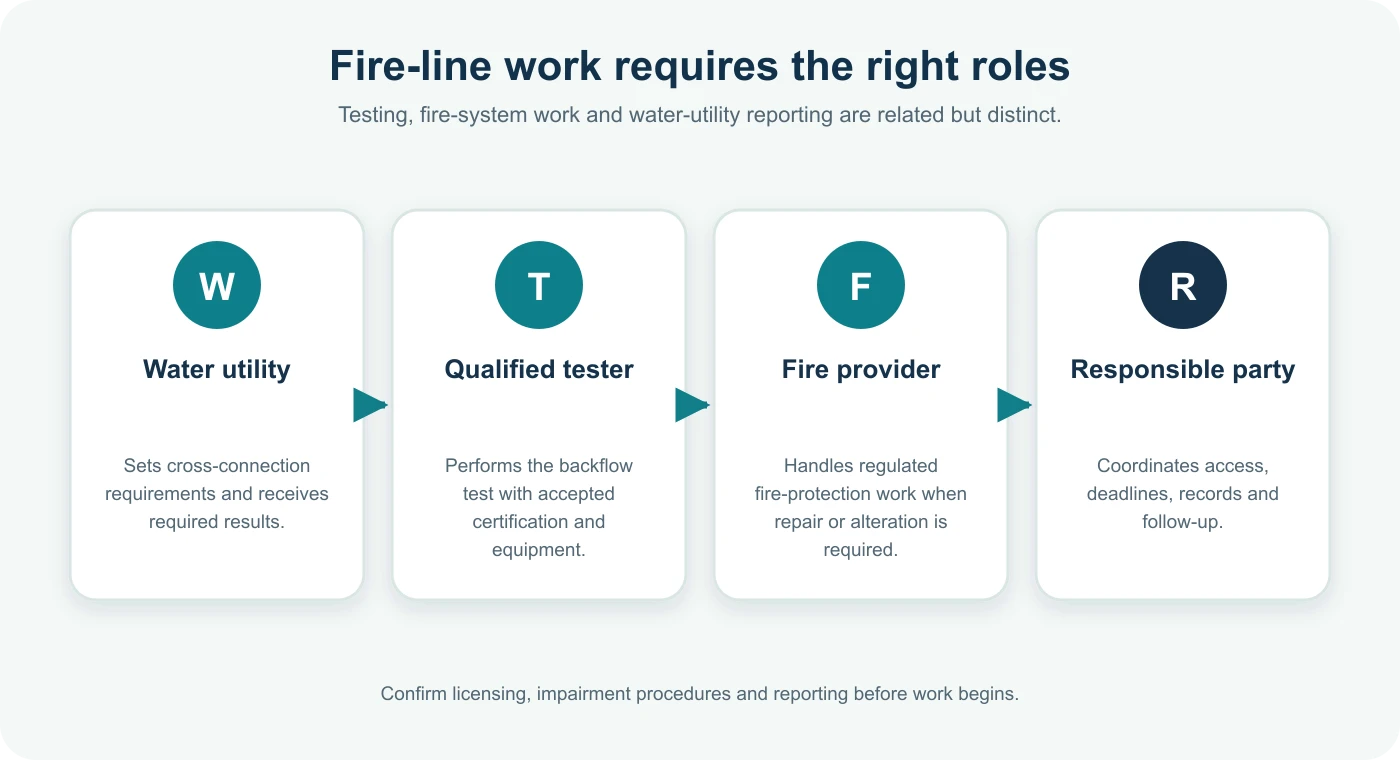
Apopka’s manual states that work on a fire-protection system after the statutory point of service must be performed under the applicable Florida fire-protection contractor classifications. It references Fire Protection Contractor I, II, or V depending on the work. Testing credentials alone may not authorize every repair, installation, or impairment activity.
The manual expressly requires a City plumbing permit for fire-protection devices. Confirm the specific permit, fire review, monitoring, and inspection requirements before replacement or piping work begins.
Information needed for a fire-line request
- Property and billing addresses
- Serving water utility and complete compliance notice
- Assembly type, size, make, model, and serial number if known
- Whether chemical additives are present
- Whether valves or tamper switches are monitored
- Fire-alarm and monitoring-company coordination requirements
- Site contact, access rules, and acceptable impairment window
- Prior failed-test, repair, or replacement information
Testing, failures, and restoration
A qualified provider should follow the site’s impairment procedure, operate the necessary valves, complete the backflow test, restore the system, and verify the appropriate normal condition. If the assembly fails, corrective work must protect the life-safety system and be followed by a passing test and proper reporting.
Apopka says commercial failures require immediate remediation, and its ordinance sets a 14-day outside correction period for failed devices. Use the most urgent instruction. Review failed-test guidance and commercial compliance planning.
Fire-line testing questions
Can any certified backflow tester test a fire-line assembly?
Not necessarily. A provider must have the credentials appropriate to the dedicated fire system and the exact testing, repair, replacement, or impairment scope.
How often are commercial fire-line assemblies tested?
For applicable City of Apopka commercial accounts, backflow assemblies follow the annual testing requirement. Confirm the notice and utility record.
Will fire protection be interrupted?
Valve operation or temporary impairment may be required. The qualified provider and property contacts should coordinate the safe procedure and restoration for the site.
What happens after a failure?
The assembly needs qualified corrective work, a passing retest, proper system restoration, and submission through the utility’s current process.
Does Apopka Backflow claim fire-contractor credentials?
No. This is an independent informational and service-request website. Provider credentials and coverage must be verified before assignment.
See the Apopka requirements, testing process, and the official City manual.