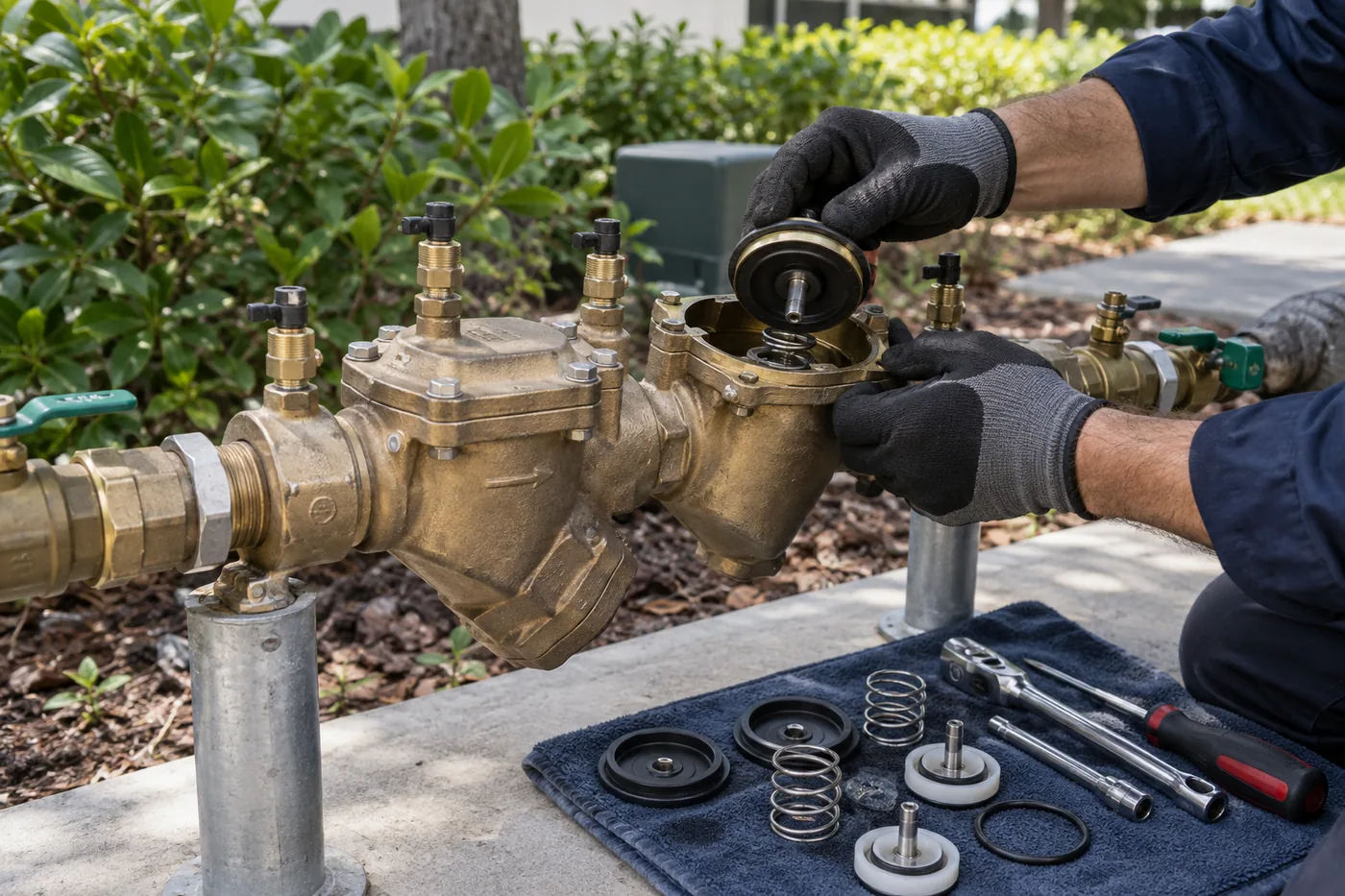
A failed or leaking backflow preventer may be repairable, but the visible symptom does not provide the full diagnosis. Worn checks, seals, springs, relief-valve components, debris, corrosion, freeze damage, and shutoff-valve problems can produce different test results and different repair decisions.
For a City of Apopka account, the water customer is responsible for corrective work. The City does not currently repair or replace certified devices. A qualified provider should review the failed test, identify the assembly, explain the proposed work, and test the assembly again after repair.
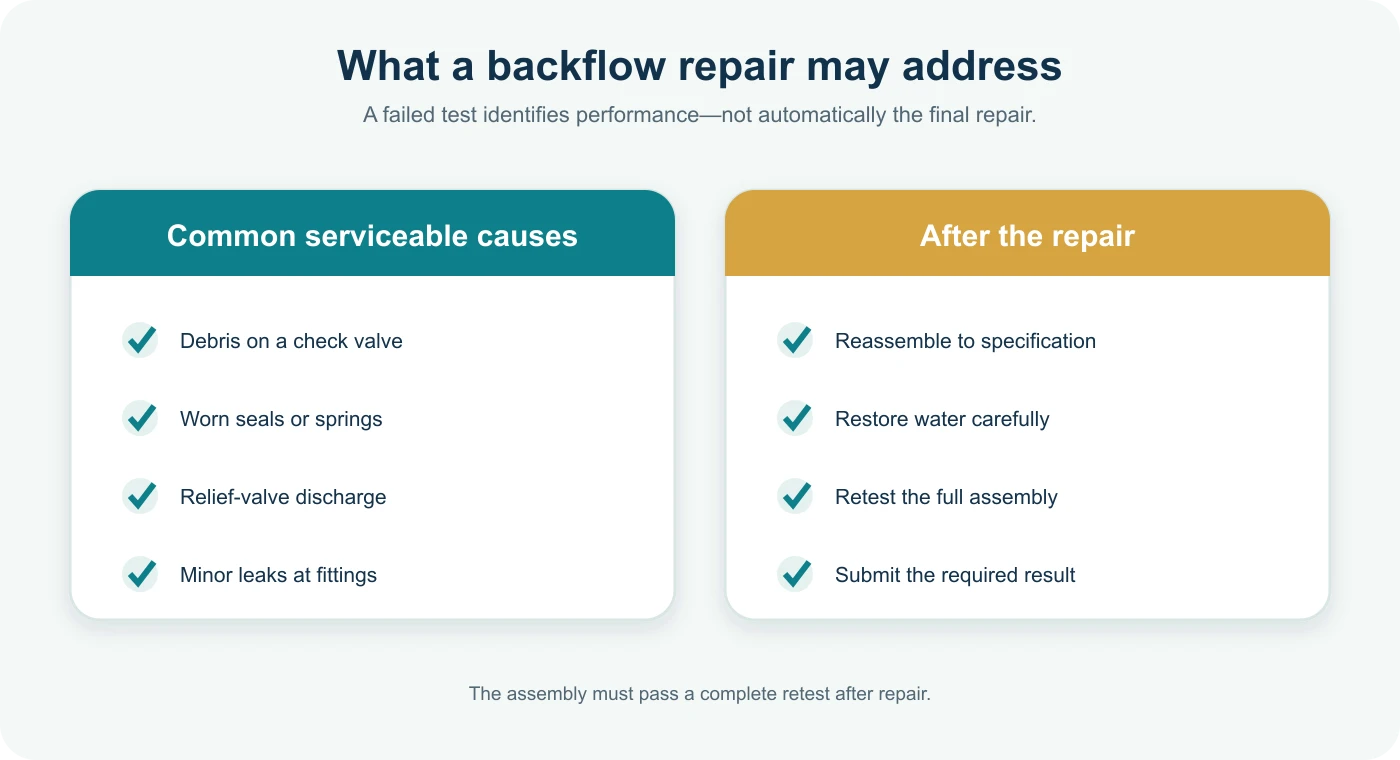
Common backflow repair situations
- One or more check valves do not hold the required pressure
- An RP relief valve opens too early or continues to discharge
- Debris or mineral buildup prevents an internal component from sealing
- Approved seals, springs, checks, or relief components are worn
- Test cocks or shutoff valves leak, seize, or cannot support testing
- Exposed piping or an assembly is damaged by impact or cold weather
- The assembly fails after long seasonal shutdown or limited maintenance
How a repair request should proceed
- Keep the failed report. It should show the assembly and the measured component failure.
- Confirm the serving utility and deadline. Apopka, Orange County Utilities, Ocoee, Winter Garden, and other providers use separate programs.
- Identify the device. Provide the make, model, size, serial number, location, and clear photos when safe.
- Evaluate the complete assembly. The body, shutoff valves, approved parts, installation, and accessibility all affect repairability.
- Complete qualified corrective work. Fire-line assemblies and some installation conditions require specialized credentials.
- Retest and report. A passing test after repair—not the repair invoice alone—documents acceptable performance.
Apopka’s correction and retesting rules
Section 78-211 of the Apopka Code requires a failed device to be repaired and retested or replaced within 14 days. The City’s published commercial guidance also says failed commercial tests require immediate remediation. Follow the earliest applicable requirement and the property’s current notice.
Testing after repair is mandatory under the City ordinance. Properly enrolled testers use Apopka’s Backflow BMP portal to submit results. The water customer should confirm that the corrected report was submitted and retain the original failed result, repair record, and passing retest.
Repair or replacement?
Repair is often practical when the assembly body and installation are sound, approved parts are available, and the likely corrective cost is proportionate. Replacement may make more sense when the body is cracked or badly corroded, the assembly is obsolete, approved parts are unavailable, the device is incorrectly configured, or it has repeated failures.
The decision should account for the required assembly type, not only price. A replacement must match the hazard and utility requirements, be installed correctly, and pass a new test. See the failed-test action guide for the complete decision path.
Permits and provider qualifications
Apopka’s Cross-Connection Control Manual says a plumbing permit is not required for testing or repair of a backflow assembly. That does not remove certification or licensing requirements. The provider still must be qualified for the work, and dedicated fire-protection systems can require separate fire-contractor credentials.
Installation, new construction, and fire-protection work can have different permit requirements. If a repair changes into a replacement or piping alteration, confirm the scope before proceeding.
Backflow repair questions
Can a leaking backflow preventer still pass?
Visible leakage warrants evaluation, but only the required field test determines whether the internal components meet the applicable performance standard.
Can repair and retesting happen during one visit?
Sometimes, depending on the provider’s qualifications, authorization, available approved parts, assembly condition, and access. Include the model and failed result with the request.
Does a repaired backflow preventer need to be retested?
Yes. Apopka requires testing after repair, and a passing retest is necessary to document corrected performance.
Who submits the updated result?
The water customer must ensure the qualified contractor or technician submits the completed report through the City’s approved process.
Is Apopka Backflow a repair contractor?
No. It is an independent informational and service-request website. Requests are intended for routing to a qualified provider when appropriate coverage is available.
Review the Apopka requirements, testing process, official City guidance, and Section 78-211.