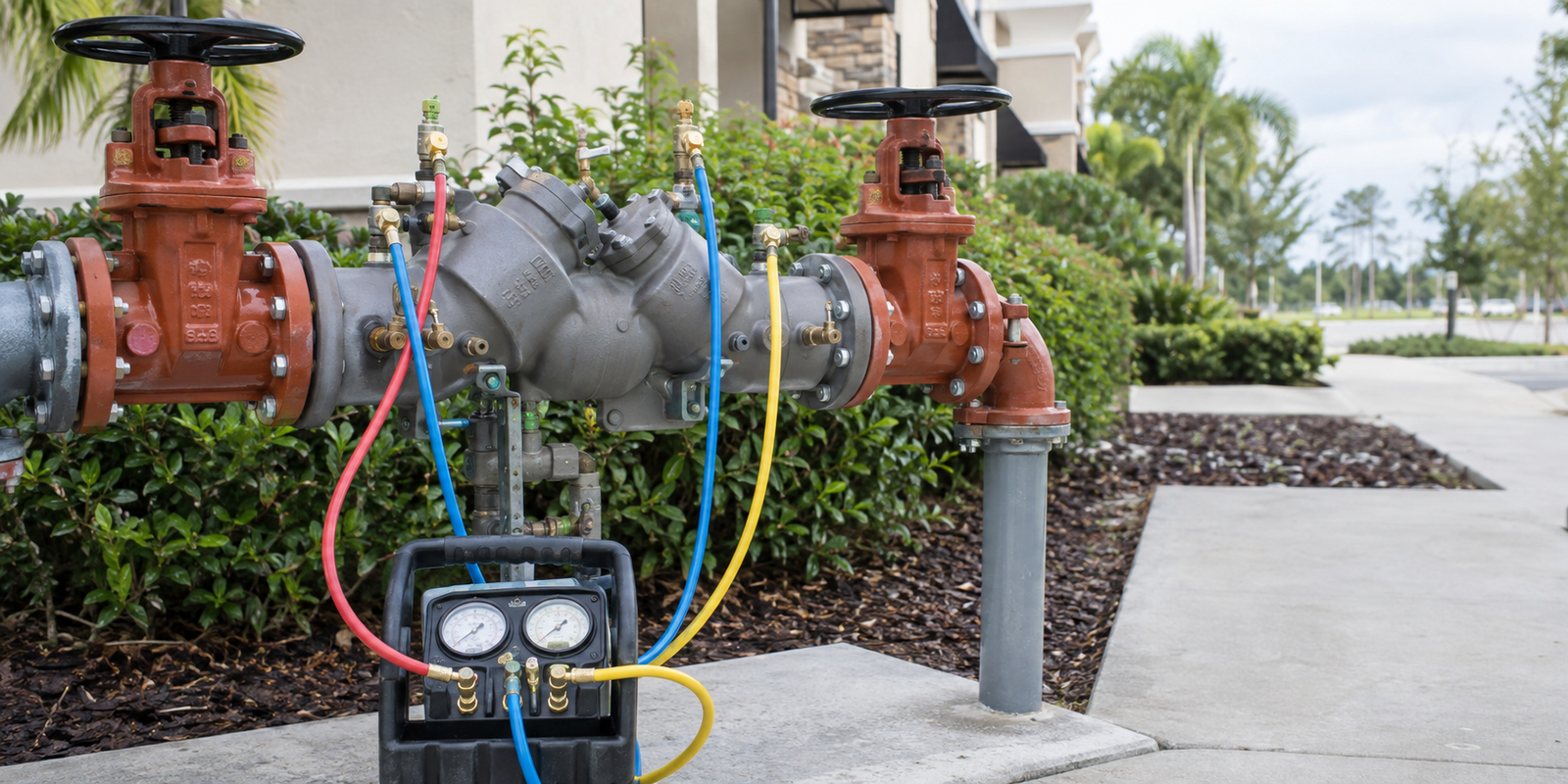
Commercial backflow testing requires more coordination when a property has several meters, tenants, irrigation zones, process connections, or fire-protection systems. A complete service request should identify every assembly tied to the notice, confirm access, and separate domestic or irrigation testing from fire-line work that may require specialized licensing.
For non-residential service connections supplied by the City of Apopka, testing is required annually. The water customer is responsible for arranging qualified testing, maintaining each assembly, correcting failures, and ensuring the completed result reaches the City through its current reporting process.
Commercial properties and assemblies
Backflow requirements are based on the service connection and the degree of hazard, not simply the business category. Covered sites can include retail centers, restaurants, offices, apartment and condominium communities, homeowners’ associations, hotels, schools, healthcare properties, warehouses, industrial facilities, and mixed-use developments.
A single property may have separate assemblies for domestic water, irrigation, process water, chemical systems, or fire protection. Match the notice to the meter and assembly before the visit. If multiple addresses or accounts are involved, provide a location list instead of assuming one test covers the entire property.
Plan for annual compliance
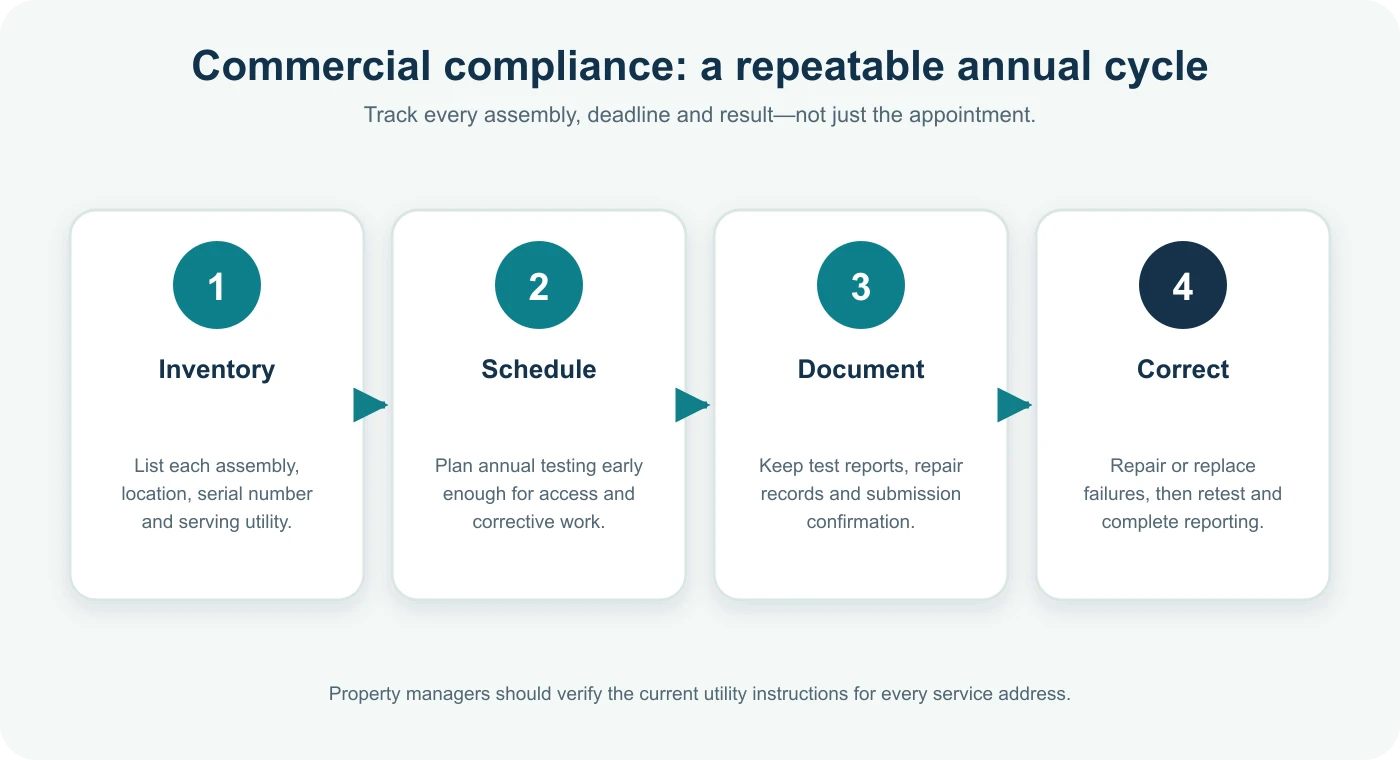
- Inventory the assemblies. Record the service address, meter, device type, size, serial number, and location for each unit.
- Compare the City notice. Confirm that every listed assembly is included and identify any missing or changed equipment.
- Coordinate access. Arrange keys, gate codes, tenant contacts, irrigation controls, rooftop or mechanical-room access, and escorts.
- Protect operations. Testing can briefly interrupt water flow. Schedule around customers, tenants, production, food service, or other sensitive operations.
- Allow time for failures. A failed commercial assembly needs immediate remediation, corrective work, and another test.
- Confirm reporting. Make sure the tester submits the result through Apopka’s Backflow BMP process and retain a copy by assembly.
Commercial failures require prompt action
Apopka’s testing page says failed commercial tests must be remediated immediately. The ordinance also requires a failed device to be repaired and retested or replaced within 14 days. Treat the more urgent instruction and the property’s current notice as controlling. Testing alone does not close a failed compliance item.
If a device cannot be corrected promptly, the tester should communicate with the City as required. The City manual explains that the response can depend on the degree of hazard and that water service may be affected when required protection is not maintained.
Fire-line assemblies need separate planning
A fire-protection backflow can involve impairment procedures, monitoring, supervisory devices, and Florida fire-protection licensing rules. Anyone working beyond the point of service for a fire system must have the qualifications required for that scope. Route these requests through Fire-Line Backflow Testing rather than treating the assembly like a standard irrigation device.
Managing several properties or accounts
Property managers, association boards, and facility teams can reduce missed deadlines by keeping an inventory with the utility, address, account, assembly type, serial number, location, last passing result, and next due date. For a multi-property request, include each notice and identify on-site contacts separately. The form can accept the initial details; additional records can be coordinated after review.
Commercial testing questions
How often is commercial testing required in Apopka?
The City publishes an annual testing requirement for applicable commercial and other non-residential service connections.
Can one property have several due assemblies?
Yes. A site can have separate domestic, irrigation, process, fire-line, or other containment assemblies. Compare the notice, meters, and site inventory before service.
Who can perform commercial testing?
Use a properly certified tester whose current credentials and test equipment meet the City’s requirements. Fire-protection assemblies may require additional licensing.
Does testing or repair require a plumbing permit?
The City manual says a plumbing permit is not required for testing or repair. Installation, new construction, and fire-protection work can have separate requirements.
Is Apopka Backflow the City or a testing company?
No. It is an independent information and service-request website. Requests are intended for routing to a qualified provider when coverage is available.
Review the Apopka requirements guide, testing process, and official City testing requirements.