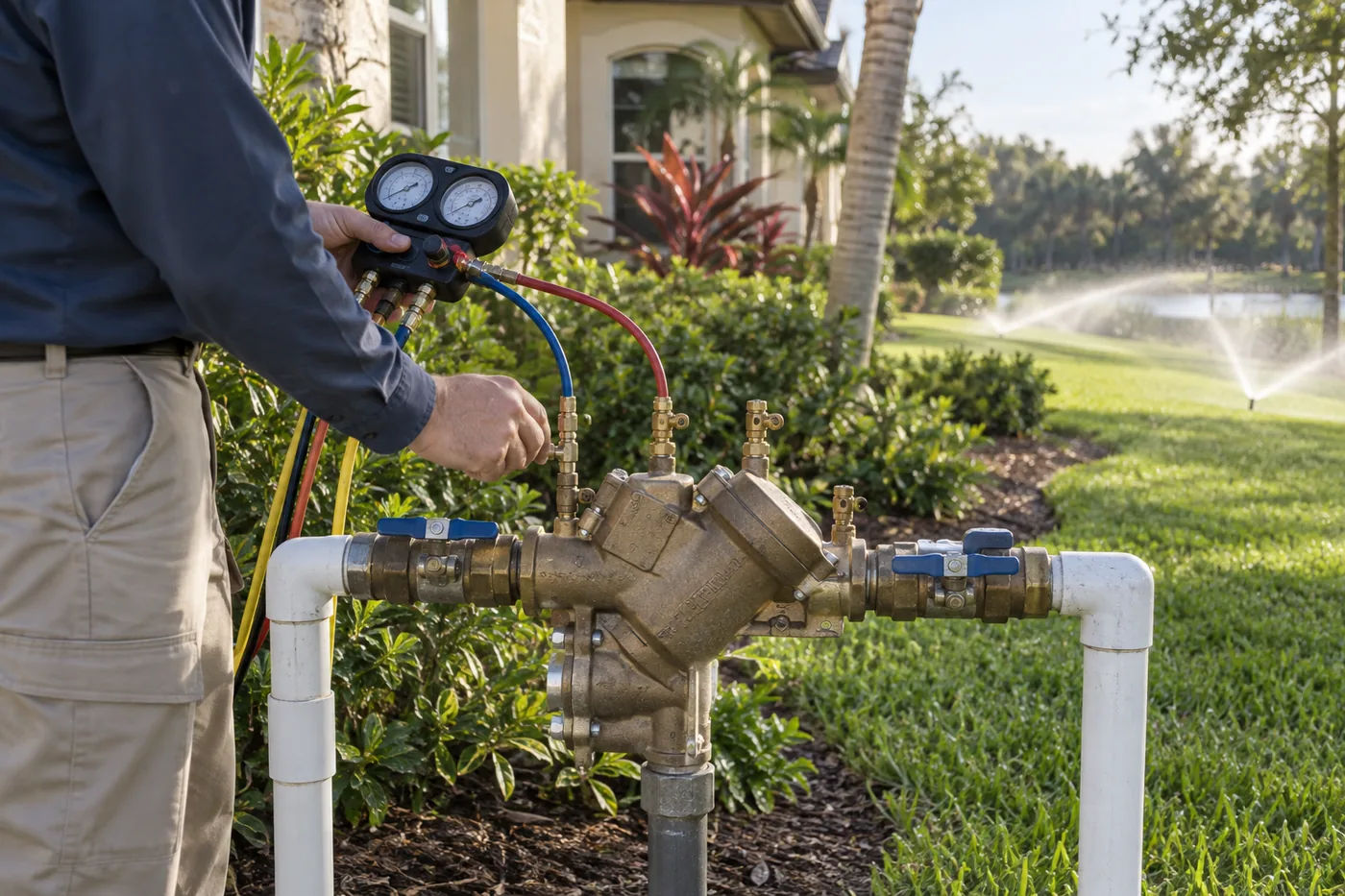
Irrigation systems can expose drinking-water piping to fertilizers, pesticides, standing water, soil, private wells, ponds, or reclaimed water. The correct backflow protection and service process depend on how the irrigation system is supplied—not simply on the presence of sprinklers.
The City of Apopka says irrigation systems require backflow protection and publishes different minimum assembly types for potable, well, reclaimed, and surface-water sources. Before requesting a test, confirm the serving utility, irrigation source, property classification, and actual device.
Start with the irrigation water source
- Potable water: The City’s table lists a PVB or RP for smaller residential potable-irrigation connections, depending on the property and hazard.
- Private well: An auxiliary water source creates a cross-connection concern; the City table identifies an RP for residential well-water irrigation.
- Pond or surface water: Apopka identifies an RP for residential surface-water irrigation because this is a separate non-potable source.
- Reclaimed water: Some residential properties use a non-testable dual check maintained on a separate cycle, while larger or different classifications can require another assembly.
- Commercial irrigation: The City’s table generally identifies RP protection for non-residential irrigation sources, subject to the specific hazard and City determination.
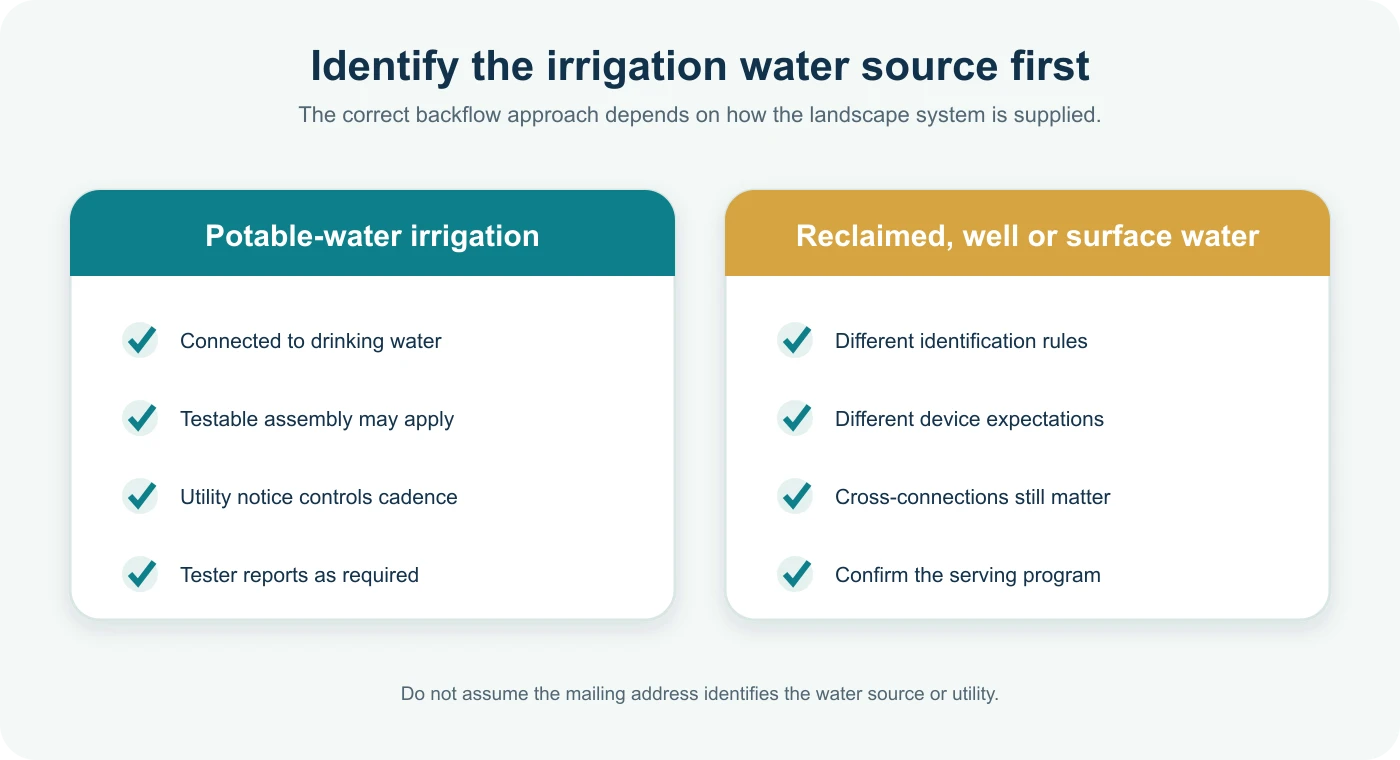
Potable-water testing and reclaimed-water maintenance differ
An applicable testable residential assembly on a City of Apopka account follows the two-year testing schedule. A covered commercial assembly follows the annual schedule. A testable device is checked with calibrated equipment and its result is submitted through the City’s current reporting process.
By contrast, Apopka states that reclaimed-water dual checks are maintained every five years because they are not testable like an RP, PVB, or DCVA. The City also describes a conversion option in reclaimed-water service areas. Do not order a standard backflow test until the device and water source are confirmed.
Where an irrigation backflow device may be located
The City notes that a potable-water irrigation preventer may be near the irrigation valves or service piping. At a reclaimed-water property, a dual check may be on the customer side of the potable-water meter. Above-ground devices should be visible and safely accessible; buried or concealed equipment should not be opened or operated without appropriate guidance.
What to include with an irrigation request
- Service address and water utility shown on the bill
- Residential, multifamily, association, or commercial property type
- Potable, reclaimed, well, pond, or other irrigation source
- Complete notice, account or assembly number, and due date
- Clear photos of the device, tag, and surrounding piping
- Manufacturer, model, size, and serial number if readable
- Leaks, freeze damage, prior failed results, or recent irrigation work
- Gate, controller, tenant, or landscape-access instructions
If the irrigation assembly fails
A failed test requires corrective work and another test. Under Apopka’s ordinance, the assembly must be repaired and retested or replaced within 14 days. Commercial failures require immediate remediation. See the failed-test guide and use the notice’s most urgent instruction.
Irrigation backflow questions
Does every irrigation system need the same device?
No. The required protection depends on the water source, hazard, property classification, connection, and utility rules.
Is a reclaimed-water dual check tested every two years?
Not under Apopka’s dual-check program. The City describes these devices as non-testable and maintained on a five-year cycle.
How often is a testable residential irrigation assembly tested?
For applicable City of Apopka residential assemblies, the published interval is every two years. Commercial assemblies are tested annually.
Can an irrigation contractor automatically perform the compliance test?
Not necessarily. The tester must hold the current certification and meet the reporting requirements accepted by the serving utility.
Is Apopka Backflow part of the City?
No. It is an independent informational and service-request website and is not affiliated with or endorsed by the City.
See residential testing, commercial testing, the Apopka requirements guide, and official City assembly information.